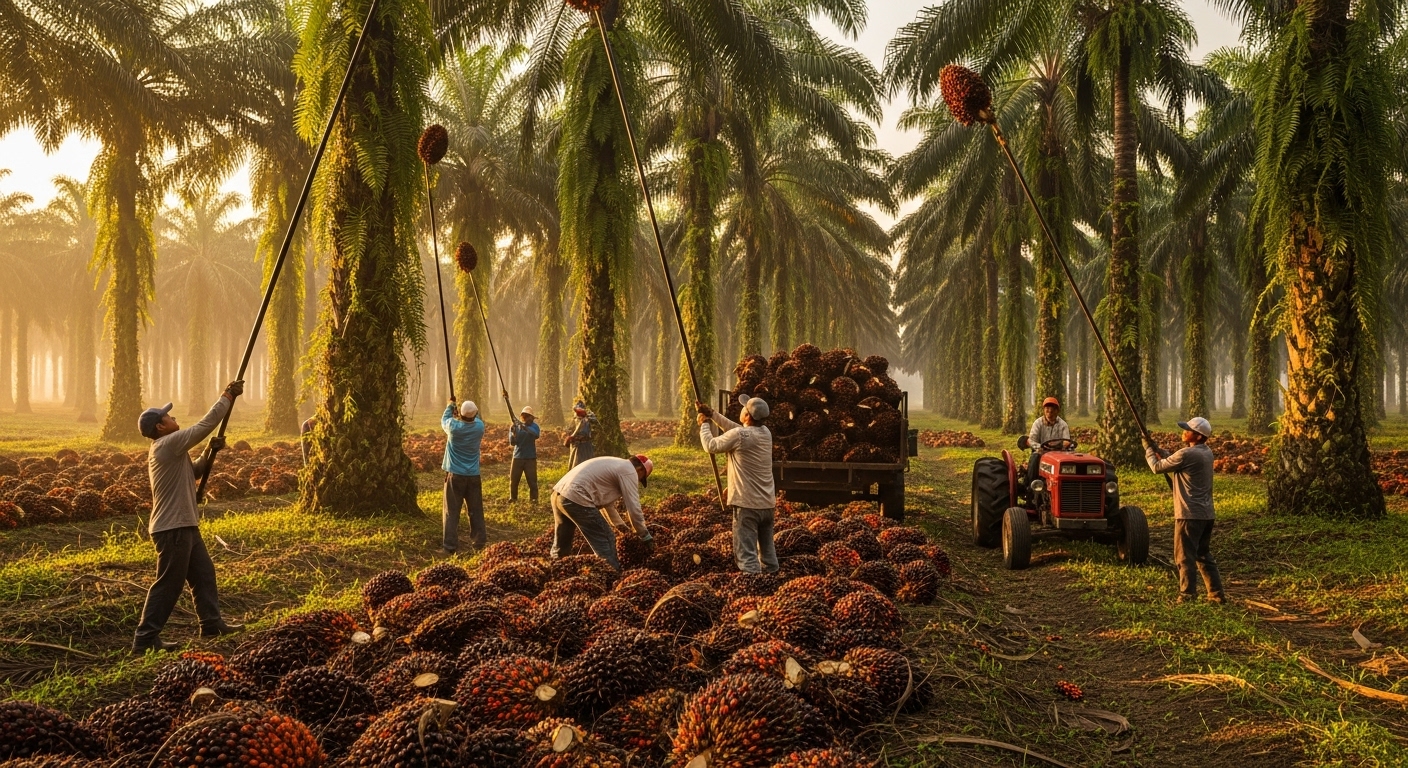
Crude palm oil (CPO) production in Africa and South America remains modest compared to Asia’s giants (Indonesia, Malaysia) but has been growing. In Africa, Nigeria leads production (≈1.50 million tonnes in 2023, ~2% of world output), followed by Cameroon (0.465 million tonnes), Côte d’Ivoire (0.615 million tonnes), Ghana (0.300 million tonnes), Democratic Republic of the Congo (≈0.300 million tonnes), and Sierra Leone (~0.075 million tonnes). In South America, Colombia is the largest producer (~1.875 million tonnes, 2% of world), followed by Brazil (0.585 million tonnes), Ecuador (0.450 million tonnes), and Peru (0.275 million tonnes). (These figures are based on 2023 data from the USDA/IPAD Crop Explorer.) Notably, yields in Africa lag Asian levels (e.g. the DRC averages ~1.1 t/ha vs 3.8 t/ha in Malaysia), indicating room for productivity improvements. Regional initiatives aim to close yield gaps (e.g. Côte d’Ivoire’s $440M program to introduce better seedlings and techniques). For example, Democratic Republic of Congo’s PHC plantation (107,000 ha) produced ~90,000 tonnes CPO in 2023 and plans to expand capacity to 2 million t by 2032 through agronomic upgrades.
Export markets
African CPO is mostly sold within the continent to neighboring countries, with some exports to Europe/North America. For instance, in 2023 Ghana exported 29,420 t of CPO (US$36.8M), about 85% of it to Nigeria. Other destinations for Ghanaian palm oil were small (Togo, Netherlands, USA, UK, etc). Côte d’Ivoire produces ~573,000 tonnes/yr and exports roughly 25% of this, mainly to regional buyers (Mali, Burkina Faso, Niger, Ghana, Nigeria). In West Africa overall, Nigeria is the largest importer of regional CPO. By contrast, South American producers ship mostly to nearby markets. Trade data show Peru’s palm oil exports (H1 2025) were dominated by Mexico (≈50% of value) and Honduras (30%), with Guatemala and even Venezuela as minor markets. Colombian CPO largely goes to Brazil, Mexico and some EU buyers, while Brazil exports modest volumes to Uruguay, Germany and Angola. (In short, African suppliers focus on neighboring countries, whereas Latin producers trade within the Americas.)
Applications of Crude Palm Oil
CPO is a versatile commodity. It is the world’s most-consumed edible oil, used for cooking and food manufacturing. It is valued as a cheap cooking fat (often a substitute for butter/margarine) and is widely blended into products like frying oil, snack foods, bakery goods and mayonnaise. A portion (est. ~5–10%) of global palm oil also goes into biodiesel and industrial uses. Beyond food and fuel, palm oil finds applications in cosmetics, soaps, detergents, animal feed and various oleochemicals. (For example, the mesocarp oil is used in soap and margarine while palm kernel oil is used in confectionery and cosmetics.) Its broad use “cuts across industries from food to cosmetics, chemicals to energy, and pharmaceuticals to animal feed”.
Investment/Expansion Strategy
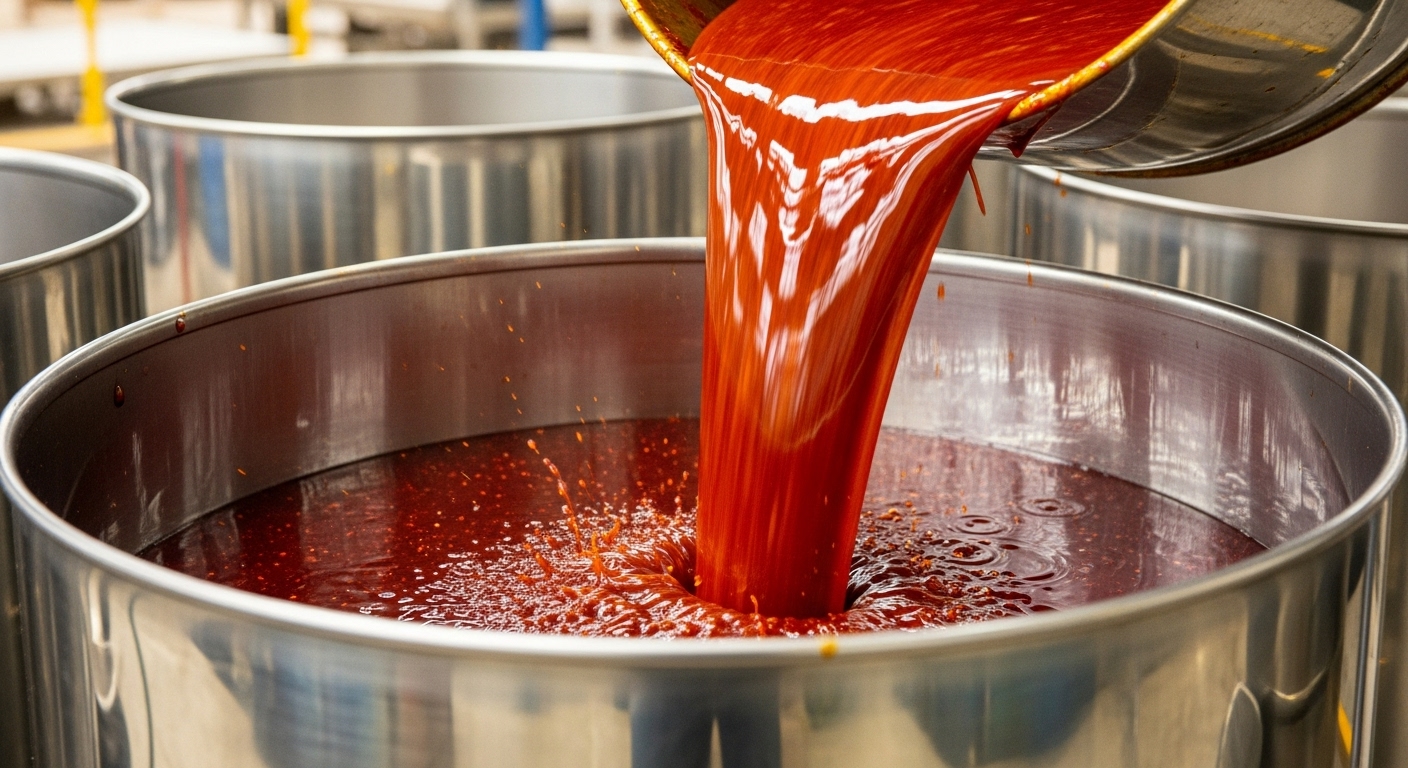
To raise African and Latin American CPO output, investors are expanding processing capacity. For example, Nigerian agro-industrialist Presco Plc launched a capital raise in 2025 to fund both greenfield and brownfield acquisitions (oil palm mills and plantations) aimed at boosting output. Presco is acquiring assets such as Saro Oil Palm (for $46M) and Ghana Oil Development Company (Ghana Oil Dev. Co., ~$65M deal), projecting these to add significant tonnes and profits. This shows a model: raising funds via equity to buy and modernize mills and estates. Upgrading technology is also key. A recent case study in Nigeria demonstrated that installing advanced stainless-steel palm-oil presses (with automated PLC control) doubled daily capacity while improving hygiene. These units reduced downtime and help meet food-safety standards (ISO 22000/HACCP) through corrosion-resistant design. In South America, companies likewise partner with smallholders and governments to expand cultivation; for instance, Peru is planning to develop an additional 267,000 ha of palm area to tap export growth. In all cases, strategy emphasizes vertical integration (plantation + mill), improved yields, and capturing export markets.
Quality and Certification Challenges
Entering high-value export markets requires strict quality standards. African and Latin producers often struggle with food-safety and traceability certifications. For example, modern processing equipment must comply with ISO 22000 or HACCP systems. New stainless-steel mills have been shown to better meet these standards, minimizing contamination and residues. Processors are also advised to obtain internationally recognized certifications (ISO 22000/ISO 9001, HACCP, RSPO) to satisfy importers. (One guide explicitly notes that having ISO, HACCP and RSPO certification “meets buyer expectations” and builds trust.) Other quality challenges include high free-fatty-acid levels in traditional African palm oil (due to delayed processing) and inconsistent grading, which hinder premium pricing. Producers must invest in better sorting, rapid processing and laboratory testing.
Environmental regulations pose additional hurdles. Export markets increasingly demand sustainable palm oil. While RSPO certification is still rare in Africa, global buyers (especially in Europe) require deforestation-free supply chains. In response, Côte d’Ivoire’s roadmap includes sustainability training and safeguards. Achieving such certification adds cost and complexity. Finally, low overall productivity is a challenge: Africa’s average yield (~1.1 t/ha) is far below Asia’s (≈3.8 t/ha). Closing this gap requires investment in improved varieties, fertilizer use and technical support for smallholders – all of which demand capital and coordination.
Other Opportunities and Market Trends
Despite challenges, opportunities abound. Global demand for palm oil is rising: international imports grew by ~24.8% from 2020 to 2024 (value up to $42.3B). Asia still dominates demand (57.6% of 2024 imports), but Africa itself accounted for 14.2% of import volume in 2024, reflecting a large captive market of over 1 billion people. This means African production could substitute some costly imports (e.g. Nigeria currently imports palm oil from Malaysia). Large tracts of suitable land also remain underutilized: one study estimates ~167 million hectares in the DRC alone could grow oil palm. Government plans (e.g. Côte d’Ivoire’s multi-year program) and rising palm oil prices can further incentivize investment. Technological advances (like high-efficiency presses) and financing can improve yields and margins. In South America, expanding biofuel blending (e.g. biodiesel mandates) also supports palm oil demand. In sum, Africa and Latin America have room to boost CPO output by upgrading farms and mills, tapping growing regional and global markets, and meeting quality standards.
Adalidda supplies crude palm oil to importers and manufacturers worldwide. We offer bulk shipment starting at 15,000 MT, packed in 24,000 L flexitanks for safe, cost-efficient transport. For competitive quotations, specifications (COA, spec sheet) and long-term supply agreements, please contact our sales team.
Bibliography
Palm Oil Explorer
https://ipad.fas.usda.gov/cropexplorer/cropview/commodityView.aspx?cropid=4243000&sel_year=2023&rankby=ProductionCDP
Palm Oil Explorer
https://ipad.fas.usda.gov/cropexplorer/cropview/commodityView.aspx?startrow=11&cropid=4243000&sel_year=2023&rankby=ProductionCDP
DRC’s Plans To Dramatically Increase Palm Oil Production | Pulitzer Center
https://pulitzercenter.org/stories/drcs-plans-dramatically-increase-palm-oil-production
Côte d’Ivoire launches US$440M plan to boost palm oil sector over next decade
https://ukragroconsult.com/en/news/cote-divoire-launches-us440m-plan-to-boost-palm-oil-sector-over-next-decade/
Ghana Crude palm oil exports by country | 2023 | Data
https://wits.worldbank.org/trade/comtrade/en/country/GHA/year/2023/tradeflow/Exports/partner/ALL/product/151110
Top 5 Global Palm Oil Exporting Countries in H1 2025
https://tradeint.com/insights/top-5-global-palm-oil-exporting-countries-in-h1-2025/
Palm Oil Imports by Country 2024
https://www.worldstopexports.com/palm-oil-imports-by-country/
Investor’s Guide to Palm Oil | Toptal®
https://www.toptal.com/management-consultants/market-research-analysts/palm-oil-investing
Presco launches rights issue in bid to raise N236.7 billion
https://www.premiumtimesng.com/news/top-news/835031-presco-launches-rights-issue-in-bid-to-raise-n236-7-billion.html
High-Efficiency Palm Oil Pressing Units in Africa | Case Study on Doubling Production Capacity
https://www.oilrefyne.com/news/case-study-on-african-market-high-efficiency-palm-oil-pressing-units-double-daily-output.html
The Top 5 Edible Oil Exporting Countries You Need to Explore in 2025
https://www.tradologie.com/blogs/the-top-5-edible-oil-exporting-countries-you-need-to-explore-in-2025/